Step Back In Time At The Oldest Wooden School house In America.
Travelers exploring St. Augustine discover an extraordinary historic treasure on St. George Street. Indeed, history lovers treasure the oldest wooden schoolhouse in America for its rich heritage and charm. Furthermore, this preserved homestead tells the inspiring story of early colonial settlers in Florida. For example, visitors step inside authentic eighteenth-century rooms filled with genuine artifacts. Consequently, taking a trip to St. Augustine offers an unforgettable journey into living history. Therefore, you should plan your visit today to experience this iconic historic museum firsthand.
Exploring The Oldest Wooden School house which is now a MUSEUM
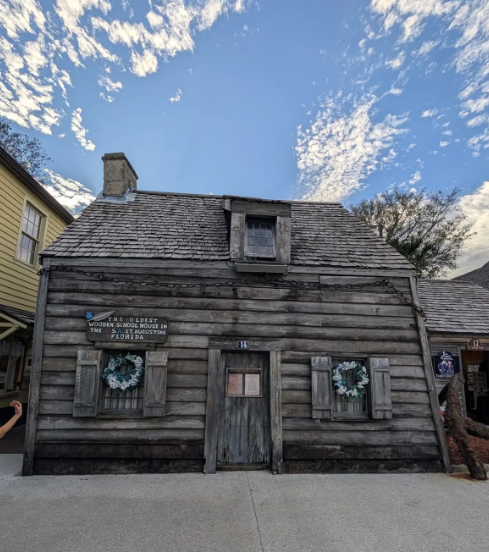
Although now not a schoolhouse, it is now a museum. The title for the oldest school in America goes to Collegiate School (est. 1628): Manhattan, NY. The historic Genopoly homestead stands near the north end of St. George Street. Indeed, the wooden building sits just inside the historic City Gate of St. Augustine. Furthermore, early property records trace ownership of this prime land parcel back to 1740.
For example, Spanish officers originally owned the town property during the first Spanish colonial period. However, Great Britain took possession of Florida in 1763 following global treaty agreements. Consequently, a land broker named Jesse Fish managed real estate sales for fleeing Spanish residents. As a result, Fish sold the land to Juan Genopoly on October 1, 1780. Therefore, the Genopoly family established a lasting homestead that endured for over a century.
The Story Of Greek Carpenter Juan Genopoly
Juan Genopoly possessed remarkable skills as a master carpenter from Mani, Greece. Indeed, he originally arrived in Florida in 1768 with Mediterranean settlers. Furthermore, these indentured laborers worked under harsh conditions on a plantation in New Smyrna. Consequently, surviving colonists fled seventy miles north to seek refuge in British St. Augustine.
For example, Genopoly settled in the town’s vibrant Minorcan Quarter near the city gate. In addition, he remained when Spain regained control of Florida during the second Spanish period. Eventually, he constructed a sturdy new wooden homestead between 1800 and 1810. As a result, his handcrafted home still stands today on historic St. George Street. Therefore, visitors admire his exceptional carpentry skills over two centuries later.
From Minorcan Settlement To St. Augustine Heritage
The Minorcan Quarter represents an inspiring story of human resilience and cultural strength. Indeed, Mediterranean colonists brought rich traditions, customs, and deep faith to St. Augustine. Furthermore, these hard-working families built a close community despite facing severe economic hardships. Consequently, their unique heritage shaped the cultural identity of Florida’s oldest city for generations.
For example, Minorcan families retained their property when Florida joined the United States in 1821. In addition, their descendants continued operating local businesses along St. George Street for decades. As a result, historical buildings across the district showcase distinct Mediterranean and Spanish influences. Therefore, walking through these historic streets connects modern travelers with incredible colonial history.
Inside The Original Genopoly Homestead Layout
Juan Genopoly designed a practical floor plan to serve his family and community. Indeed, the main ground floor room served as the primary homestead living area. Furthermore, the front doorway opened directly onto the sandy pavement of St. George Street. Consequently, town residents easily accessed the building for social visits and community business.
For example, Genopoly added a smaller sitting room to expand the ground floor layout. In addition, a rear doorway provided easy access to the outdoor garden and detached kitchen. Meanwhile, the second floor contained private family sleeping quarters for the growing Genopoly household. As a result, the functional home accommodated daily family life and public activities smoothly. Therefore, modern architects study this smart colonial spatial arrangement with great admiration.
Classroom Life At The Oldest Wooden Schoolhouse In America
Juan Genopoly recognized the critical importance of teaching English to local immigrant children. Indeed, he opened his home to neighborhood youth from the surrounding Minorcan Quarter. Furthermore, he established one of the earliest co-educational classrooms in North America. Consequently, both boys and girls gathered inside his front room to learn basic academic skills.
For example, students practiced reading, writing, and essential arithmetic under his dedicated guidance. In addition, two of Genopoly’s children later taught classes inside the exact same room. As a result, multiple generations of St. Augustine children gained a valuable educational foundation here. Therefore, this modest wooden home became a vital center for community learning in Florida.
Tuition Prices Parchment And Quill Pens
Parents paid weekly tuition fees to support their children’s education in the 1800s. Indeed, younger students paid twelve and a half cents each week for basic instruction. Furthermore, older students paid twenty-five cents weekly to cover advanced learning materials. Consequently, teachers supplied older pupils with parchment paper, goose quill pens, and bottle ink.
For example, students sat on rough log benches, old chairs, or the wooden floor. In addition, children memorized daily lessons while practicing handwriting skills on smooth slate tablets. As a result, students developed strong academic discipline without modern desks or digital technology. Therefore, museum visitors appreciate the simple yet effective teaching methods of early pioneer educators.
Classroom Discipline And The Closet Under The Stairs
Early nineteenth-century teachers maintained strict behavioral expectations inside the crowded schoolroom. Indeed, students faced swift consequences whenever they misbehaved during daily instructional hours. Furthermore, schoolmaster Genoply utilized a cramped closet beneath the interior wooden stairs for discipline. Consequently, children nicknamed this tiny, dark main-floor closet “the dungeon” during school days.
For example, unruly students sat quietly in the dark closet until they promised good behavior. In addition, historical letters from former students describe their vivid memories of this punishment space. As a result, modern visitors peek inside the famous closet during their self-guided tour. Therefore, seeing this unique disciplinary feature offers a realistic glimpse into pioneer school life.
The Final Classes And The Eighteen Sixty Four Closure
The little school served local St. Augustine families faithfully through several pivotal historical eras. Indeed, students attended classes during Spanish rule, British governance, and early American statehood. Furthermore, teachers kept the school open through regional conflicts and major political transitions. Consequently, generations of local youth learned reading, writing, and mathematics inside these walls.
However, the school finally held its last official class session in 1864 during the American Civil War. In addition, the Genopoly family preserved the historic homestead property following the school’s closure. As a result, the building retained its authentic nineteenth-century interior features and structural integrity. Therefore, this historic structure survived as a pristine time capsule from early American history.
The Detached Kitchen House And Colonial Gardens
Colonial builders constructed a separate kitchen building directly behind the main homestead structure. Indeed, wood siding covers the exterior walls while a coquina chimney anchors the building. Furthermore, cooks prepared hot meals in detached kitchens to prevent dangerous main house fires. Consequently, this smart architectural arrangement protected the primary wooden residence from accidental blazes.
For example, an authentic brick hearth and historical cooking tools fill the restored kitchen space today. In addition, the surrounding garden area provided essential vegetables, fruits, herbs, and cooking spices. Meanwhile, an adjacent stone well supplied fresh drinking and cooking water for the entire family. As a result, guests explore a complete, self-sustaining colonial homestead during their garden walkthrough. Therefore, touring these serene grounds reveals fascinating insights into early daily domestic routines.
The Nineteen Thirty One Historic Student Reunion
In November 1931, nine former students gathered together for a momentous historical reunion. Indeed, these elderly alumni had not met as a group in over fifty years. Furthermore, they shared cherished childhood memories from their school days in the 1850s and 1860s. Consequently, their firsthand recollections provided accurate details about original classroom layouts and teaching routines.
For example, the returning students arranged the furniture exactly as they remembered from childhood. In addition, they helped establish authentic historical displays inside the Genopoly homestead rooms. As a result, their dedicated efforts allowed the property to open as a public museum. Therefore, modern travelers enjoy an accurate historical experience thanks to these dedicated former students.
The Iconic Nineteen Thirty Seven Hurricane Anchor Chain
Travelers walking along St. George Street immediately notice a massive iron chain surrounding this oldest schoolhouse in America building. Indeed, city workers wrapped this heavy ship anchor chain around the exterior in 1937. Furthermore, engineers anchored the thick metal links deep into the earth beneath the foundation. Consequently, the heavy chain secures the lightweight wooden structure against powerful coastal hurricane winds.
For example, intense tropical storms frequently sweep across coastal Florida during late summer months. In addition, this clever engineering solution preserved the original red cedar siding through severe weather. As a result, the historic building successfully survived major hurricanes without suffering catastrophic wind damage. Therefore, this protective iron chain serves as both a structural anchor and a famous photo spot.
Department Of The Interior Certification And Library Of Congress Records
National preservation leaders officially recognized the extraordinary historical significance of the Genopoly House. Indeed, the Department of the Interior in Washington, DC certified the historic building. Furthermore, the Advisory Committee of the Historic American Buildings Survey selected the site for preservation. Consequently, officials commended the building for possessing exceptional historical and architectural interest for future generations.
For example, experts created detailed architectural records, drawings, and photographs of the property. In addition, federal workers deposited these permanent records into the Library of Congress in Washington. As a result, scholars and researchers access these preserved historical files for ongoing educational study. Therefore, national preservation honors confirm the genuine cultural value of this remarkable landmark.
Experiencing The Museum Today At The Oldest Wooden Schoolhouse In America
Modern travelers enjoy an engaging, interactive museum experience upon entering the historic Genopoly homestead. Indeed, an animated figure of the Professor comes to life to welcome guests. Furthermore, the Professor shares entertaining historical stories about early schoolmaster Juan Genopoly and his students. Consequently, visitors of all ages connect immediately with nineteenth-century school life on St. George Street.
For example, self-guided walkthrough tours through this oldest schoolhouse in America allow families to explore the classroom, kitchen, and gardens. In addition, every visiting student and family receives a commemorative wooden diploma upon completing their tour. As a result, tourists leave with a unique, tangible keepsake from their St. Augustine trip. Therefore, this charming museum stop delivers fun educational entertainment for road trippers and vacationers.
Hours Admission Tuition Rates And Visitor Information
Planning a visit to the oldest schoolhouse in America museum remains quick, convenient, and budget-friendly. Indeed, the museum welcomes guests Sunday through Thursday from 10 AM until 6 PM. Furthermore, operating hours extend on Friday and Saturday from 10 AM until 8 PM. Consequently, visitors easily fit a museum tour into their morning or evening sightseeing schedules.
For example, adult tuition to enter costs $7.95 per person. In addition, admission for children aged six through twelve costs $6.95. Meanwhile, children aged five and under enter the museum completely free. As a result, families enjoy high-value historical entertainment at an affordable price point. Therefore, checking operating hours online ensures a smooth and enjoyable visit to St. Augustine.
Exploring Nearby Landmarks On St. George Street
The oldest schoolhouse in America sits in a prime location within St. Augustine’s historic pedestrian district. Indeed, St. George Street features brick avenues, boutique shops, and charming outdoor dining spots. Furthermore, the massive Castillo de San Marcos stone fortress stands just a short walk away. Consequently, tourists easily combine multiple historic attractions into one action-packed walking tour.
For example, travelers explore the nearby City Gate landmarks after finishing their schoolhouse tour. In addition, local bakeries and artisan ice cream shops offer tasty treats along the street. As a result, families spend entire days discovering fascinating sights in Florida’s oldest city. Therefore, St. George Street serves as the perfect starting point for your coastal Florida vacation.
The Best Seasons For Visiting St. Augustine
St. Augustine boasts comfortable, sunny weather that welcomes tourists throughout the entire year. Indeed, spring and autumn offer mild temperatures and refreshing ocean breezes for outdoor sightseeing. Furthermore, winter brings the world-famous Nights of Lights festival to downtown St. Augustine. Consequently, millions of glowing white lights illuminate historic buildings from November through January.
For example, evening carriage rides through illuminated streets create magical vacation memories for couples and families. In addition, summer travelers enjoy sunny beach outings alongside historic downtown walkthrough tours. As a result, any season provides fantastic opportunities for exploring historic Florida destinations. Therefore, you can book your St. Augustine travel experience with total confidence year-round.
Book Your St. Augustine Vacation Adventure Today
St. Augustine combines rich colonial history, scenic coastal beauty, and warm Florida hospitality. Indeed, standing inside the historic Genopoly homestead connects you directly to early American pioneer heritage. Furthermore, world-class historic hotels, cozy bed and breakfasts, and fine seafood restaurants await your arrival. Consequently, planning your travel itinerary to St. Augustine promises an unforgettable holiday experience.
For example, reserve your hotel accommodations early to secure prime spots near St. George Street. In addition, purchase your historic attraction passes online to save time during your vacation. As a result, your trip will unfold smoothly without unnecessary stress or long waiting lines. Therefore, pack your bags and book your St. Augustine travel experience today! And enjoy your tour at the oldest schoolhouse in America.