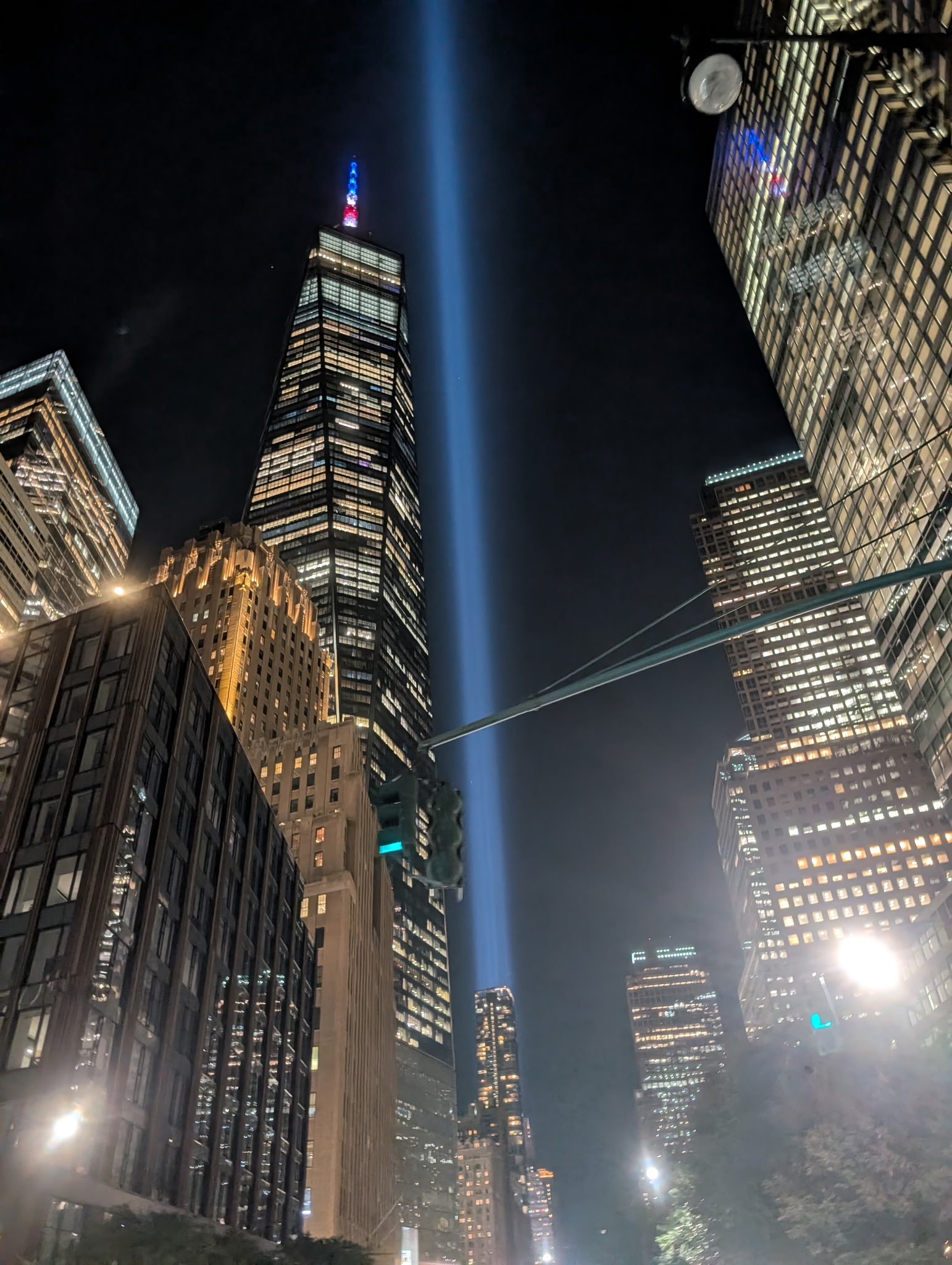
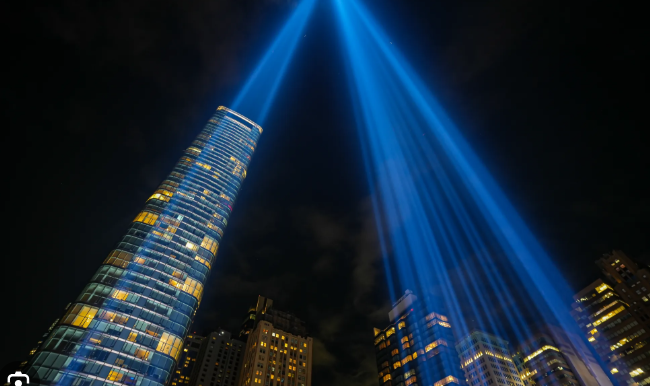
On this anniversary morning of the 9/11 25th anniversary, families gather at the National September 11 Memorial to hear the names of those lost. The two reflecting pools occupy the footprints of the Twin Towers. Water falls into the voids. White oak trees surround them. One World Trade Center rises 1,776 feet behind the site. The Tribute in Light will again send two beams into the night sky.
Downtown New York is not only standing 25 years after September 11, 2001. It is living.
That solemn ritual now sits inside a neighborhood that few people in 2001 would have recognized.
A 9-to-5 district became a 24-hour neighborhood: 9/11 25th anniversary
Before the attacks, Lower Manhattan was largely a weekday financial machine. After the closing bell, streets emptied. Today the area south of Chambers Street is one of New York’s fastest-growing residential communities.
The population more than doubled on the 9/11 25th anniversary, from about 32,000 in 2000 to more than 70,000 by 2024. Housing units jumped from roughly 21,000 in the early 2000s to more than 46,000 at the start of 2026, with thousands more in the pipeline. Many of those homes came from converting older office buildings rather than building only new towers. Ultimately, the 25th anniversary of September 11 is a special day to celebrate
Median household income in the district is now among the highest in the city. Families live here. Kids go to schools that did not exist a generation ago. Weekends fill Battery Park and the waterfront with strollers, joggers, and tourists. Restaurants that once closed at 6 p.m. stay packed at night. Getting a table at places like the Dead Rabbit or Crown Shy is no longer a weekday-only problem.
Work returned—and diversified:9/11 25th anniversary
Private-sector jobs in Lower Manhattan stood at about 257,000 in 2024, higher than in 2000 even after the Great Recession and the pandemic. Finance is still important, but it no longer dominates. Its share of employment has fallen from nearly half (or two-thirds by some measures) to about one-third. Business services, technology, media, and hospitality have grown. Companies such as Uber, Spotify, and StubHub chose downtown. AI and tech firms have taken space in One World Trade Center.
One World Trade Center itself is about 97 percent leased. Asking rents in the best buildings have climbed. In 2025 the neighborhood posted its strongest office leasing since before the pandemic. American Express broke ground this summer on 2 World Trade Center, a 1,226-foot tower designed by Foster + Partners that will become the company’s global headquarters and the last major commercial building planned for the 16-acre site. Completion is expected around 2031.
The Oculus transportation hub connects PATH trains, multiple subway lines, and the memorial. Commuters, residents, and visitors move through Santiago Calatrava’s soaring white structure every day.
Memory and ordinary life now share the same streets
The 9/11 Memorial draws more than 11 million visitors a year; the museum another 2.4 million. The Perelman Performing Arts Center has brought theater and music to the campus. A farmers market appears on Tuesdays. Outdoor movies play in the plaza. Food carts and small shops have returned. Longtime businesses that survived the attacks and the years of reconstruction still serve the same blocks.
Tourism has recovered and then some. More than eight million visitors came to the district last year. Hotels that barely existed in 2001 now number more than 40, with more rooms on the way. On today, the 9/11 25th anniversary, we’ve come a long way!
The skyline from the harbor shows both continuity and change: One World Trade Center as the new landmark, older masonry towers still standing, new glass residential buildings filling in, and Battery Park City’s parks and esplanade facing the water.
What the numbers cannot fully capture
The recovery was not automatic. It took federal aid, state and city programs that encouraged residential conversions, private investment, and years of persistence by residents, small-business owners, and first responders who stayed. Many of those same people still live and work here.
Downtown is not perfect today on the 9/11 25th anniversary. Office vacancy citywide remains higher than before the pandemic. Some critics say the World Trade Center campus itself still feels more like a secure office park than a fully woven neighborhood. Housing costs are high. Those realities exist alongside the larger story: a place that was feared to become a ghost town instead became a place people choose to live, raise children, open restaurants, and start companies.
On September 11, 2026, New Yorkers paused. They read names. They watched the lights. Then the streets filled again—with people going to work, walking dogs, heading to the waterfront, and living in a neighborhood that refused to stay defined only by what was lost.
That is the quiet, stubborn achievement of the last 25 years. The memorial remains. Life grew up around it. Always remember the September 11th 25th anniversary!!